Does the Clock Matter? A No-Nonsense Guide to Supplement Timing With Coffee, Meals, and Meds

Walk into any supplement aisle and you'll find bottles stamped with confident instructions: take with food, take on an empty stomach, take at bedtime. Some of that is grounded in how the body absorbs things. Some of it is a copywriter guessing.
The frustrating part is that the label rarely tells you why — and the"why" is where the useful information lives. This guide sorts common pill-form nutrients into three buckets: timing that genuinely matters, timing that's a mild nudge, and timing that's basically folklore.
First, the honest big picture
For most people, the single biggest timing variable is whether you remember to take the pill at all. An iron tablet taken at 3 p.m. with orange juice beats one taken at the ideal moment that never happens. Keep that in mind before rearranging your life around a schedule.
With that said, a few nutrients have real absorption quirks. Those are worth 30 seconds of planning.
Vitamin D: with fat, not with a black coffee
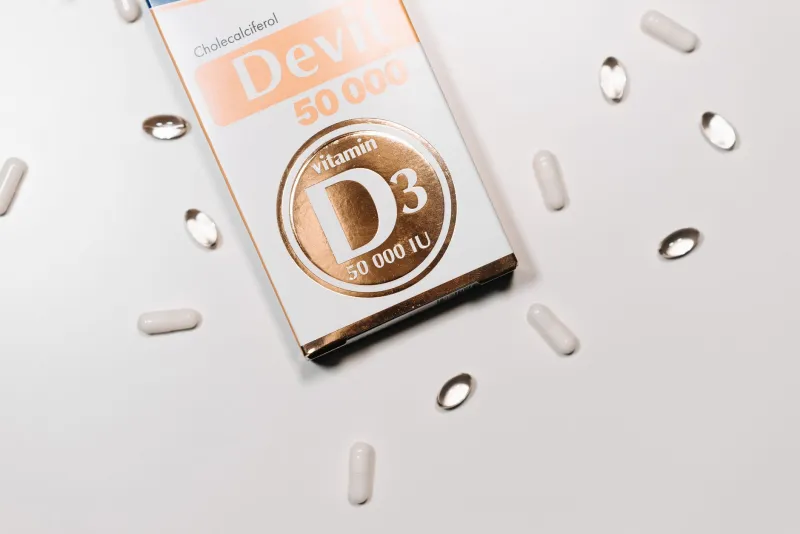
Vitamin D is fat-soluble, and studies consistently show better absorption when it's taken with a meal that contains some fat. The amount needed isn't dramatic — a couple of eggs, some avocado, yogurt, a normal lunch will do it.
The coffee problem is worth naming because so many American mornings are coffee-only. If your breakfast is a latte and nothing else, you're taking your D3 in a near-empty stomach. Move it to lunch or dinner. That's the whole tip.
Beyond that, morning versus evening doesn't seem to matter much, though some people find evening D disrupts sleep. If that's you, take it earlier.
Iron: the most high-maintenance pill in the drawer
Iron is where timing genuinely earns its reputation. It absorbs best on an empty stomach, but plenty of people can't tolerate it that way, and tolerance matters more than squeezing out percentage points.
What actually blocks iron absorption:
- Coffee and tea — tannins and polyphenols cut absorption substantially. Give it at least an hour, ideally two.
- Calcium — dairy, calcium-fortified orange juice, and calcium supplements all compete with iron. Separate them by a couple of hours.
- Antacids and proton pump inhibitors — less acid means less iron absorbed. Worth mentioning to your doctor.
What helps: vitamin C. A glass of orange juice, a handful of strawberries, or a vitamin C tablet alongside your iron can meaningfully improve uptake. If you take iron every other day, some research suggests that schedule absorbs better than daily dosing — but confirm that with your clinician rather than a blog.
Calcium: split it, and keep it away from iron
Calcium absorption drops off a cliff above roughly 500 mg in a single dose. So a 1,000 mg calcium citrate tablet taken at once isn't giving you 1,000 mg of benefit. Two 500 mg doses, morning and evening, is the smarter layout.
Calcium citrate is generally the friendlier form for older adults and anyone on acid-reducing medication, since it doesn't require stomach acid to dissolve. Calcium carbonate — the cheap, common stuff — does, so take it with food.
And yes, if you're also taking iron, put a few hours between them.
Magnesium: bedtime is a preference, not a rule
Let's be clear about what magnesium does and doesn't do. It's involved in hundreds of processes, and deficiency is genuinely common. But the evidence that it reliably improves sleep is thin — the strongest signal is in older adults with low intake.
Practical guidance: magnesium is often taken at night simply because it's easy to remember and because glycinate tends to be gentle on the stomach. There's no hard rule. If a morning dose fits your routine better, take it in the morning.
One label-level thing to know: magnesium oxide is cheap and poorly absorbed, and it's the form in a lot of budget tablets. Glycinate and citrate are better absorbed; citrate has a laxative effect some people like and others very much don't.
B12: timing is genuinely irrelevant
B12 is water-soluble, doesn't need food, and doesn't care whether it's morning or midnight. The only meaningful note is for people on metformin or long-term acid-reducing drugs, who are at higher risk of low B12 and may want to check levels. If you take levothyroxine for thyroid issues, space other supplements a few hours apart from it — that's a thyroid-med rule, not a B12 rule.
Fish oil: with a meal, and skip the fishy repeat
Omega-3 capsules absorb better with a fat-containing meal, which is the same logic as vitamin D. Practically, that means lunch or dinner rather than a 6 a.m. empty stomach.
If burping fish oil is your complaint — and it's a real reason people quit — try freezing the capsules, taking them with your largest meal, or switching to a re-esterified triglyceride form. Also check the label for actual EPA and DHA totals rather than the total "fish oil concentrate" weight, which is often padded.
The prescription medication rule nobody reads
If you take thyroid medication, certain antibiotics, or blood thinners, timing isn't optional — it's the whole point. Levothyroxine wants an empty stomach and a 30-to-60-minute window before breakfast. Tetracycline and fluoroquinolone antibiotics bind to calcium, iron, and magnesium, so those get separated by hours. Warfarin interacts with vitamin K, which is more about consistency than timing, but consistency is a daily habit.
When in doubt, ask the pharmacist. It's free at most US pharmacies, and they'll tell you more in two minutes than a bottle ever will.
The verdict
The timing advice worth caring about fits on an index card: take D and fish oil with food, keep iron away from coffee and calcium, split your calcium, take thyroid meds alone. Everything else is optional polish.
Which is a relief. Because a routine built around one honest rule — take it with the meal you never skip — beats a beautiful schedule you abandon by Thursday.
This is general information, not medical advice. Talk to a clinician or pharmacist about your specific medications and health conditions.