Your Bathroom Cabinet Is a Bad Roommate: How Storage Quietly Wears Out Your Supplements
Photo: Raysonho @ Open Grid Scheduler / Grid Engine, CC0, via Wikimedia Commons
The medicine cabinet above the sink feels like the natural home for supplements. It's out of the way, it's where the thermometer lives, and it's right there when you're brushing your teeth and trying to remember whether you took your vitamin D.
It's also, for a lot of people, the single worst spot in the house.
Your bathroom is basically a sauna with a mirror
Two people showering a day means two bursts of near-100% humidity, several times over, every single day of the year. Add a hot shower's temperature spike, a door that stays shut, and a cabinet with no airflow, and you've built a small climatic chamber optimized for chemical breakdown.
Supplements aren't inert. They're chemicals with opinions about their environment. Heat accelerates the reactions that break them down. Moisture does two things at once — it drives hydrolysis and it turns powders into clumps that never fully separate again. Light, especially UV and fluorescent, degrades a long list of vitamins on contact.
Most manufacturers design for storage around 59°F to 77°F with low humidity. A bathroom counter after a hot shower blows past that humidity ceiling easily.
What actually goes bad, and how fast
Not everything degrades at the same rate, and knowing the fragile players is more useful than vaguely worrying about all of them.
Vitamin C is the classic. It oxidizes readily, and oxidation shows up as a color shift — white powder turning cream, then yellow, then brown. That's not cosmetic. It's the nutrient converting into something your body can't use.
Probiotics are living cultures. Every degree of heat and every bit of moisture reduces the viable count. A bottle that promises 10 billion CFU at the end of its shelf life is assuming proper storage. Leave it in a humid cabinet for six months and you may be paying premium prices for dead powder.
Fish oil and other omega-3s oxidize into rancidity. The tell is unmistakable: a bottle that smells like old paint or a fish market in July, or softgels that taste aggressively fishy when they didn't before.
Fat-soluble vitamins in softgels are more resilient chemically than vitamin C, but the softgel shell itself is fragile. Heat softens it, humidity makes it tacky, and you end up with a bottle of fused lumps.
Gummies are moisture sponges. They go sticky, then clump, then grow things you don't want to think about.
Meanwhile, a plain compressed tablet of a stable mineral like magnesium or zinc will shrug off six months in a warm cabinet without much complaint. So the panic should be targeted, not global.
Expiration dates, decoded without the drama
Here's a detail that surprises people: dietary supplements in the US aren't required to carry an expiration date at all. When a date does appear, it's usually a voluntary commitment by the manufacturer — and it typically means something specific.
A "best by" or "expiration" date generally refers to the point through which the product is guaranteed to meet its label claim, assuming it's been stored properly. In other words, it's a promise about potency at a moment in time, not a hard stop where the substance becomes poison at midnight.
So what happens the month after? Usually a gradual decline in potency. A multivitamin a few months past its date is generally not dangerous — it's just less of what the label says, and very possibly a fraction of it. The exceptions that matter are probiotics (viability drops meaningfully) and oils (rancidity, which is about quality and taste more than toxicity).
The practical takeaway: don't treat dates as sacred, but don't treat them as decorative either. If you're taking a supplement for a specific reason, a bottle that's two years old may not be doing the job you think it is. If it's a general multivitamin and you're three weeks past the date, use it and move on.
A storage setup that takes four minutes
Here's the whole checklist. It's short because it doesn't need to be long.
- Pick a cool, dry, dark spot. A bedroom closet shelf, a hallway linen closet, or a kitchen cabinet away from the stove. Anywhere with stable room temperature and no steam.
- Not the bathroom. Not above the stove. Not the fridge door. The fridge is only right when the label specifically says so — and the door, with its constant temperature swings and condensation, is the worst spot inside one.
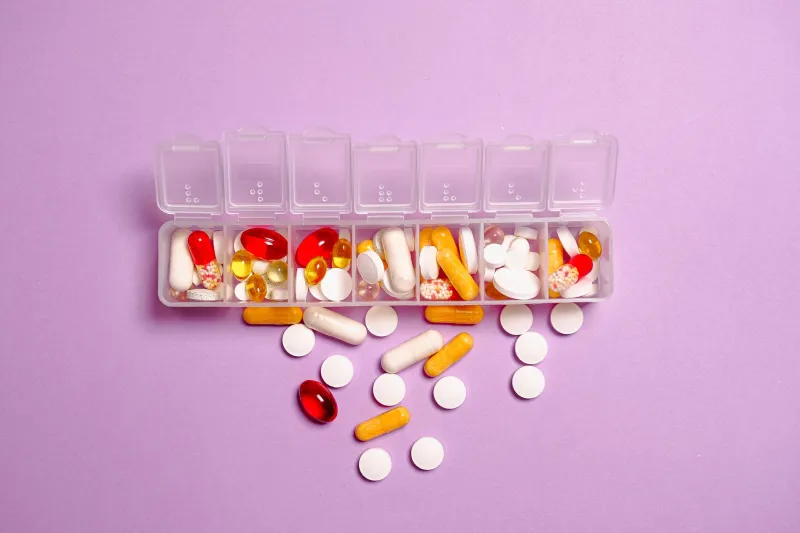
- Keep the original bottle. It was designed with the right barrier properties, and it carries the lot number and date. Those cute daily pill organizers let in light and air, so use them for a week at most, not a month.
- Keep the desiccant packet in. That little silica pillow is doing real work after every time you open the lid. Don't throw it out because it's in the way.
- Seal it properly. A lid that clicks is a lid that's working. If the cap is cracked or stripped, transfer to a clearly labeled airtight container or finish the bottle faster.
- Check the label for refrigeration instructions. Some probiotics and a few liquid products genuinely need the cold. Most pills don't, and refrigerating them invites moisture every time you take one out.
- Write the open date on the bottle. Sharpie on the cap. It's thirty seconds and it ends every future argument with yourself about how long that bottle has been sitting there.
- Keep gummies where kids can't reach. They look like candy because they're designed to, and iron-containing gummies are a genuine pediatric poisoning risk.
When to toss it instead of shaking it off
Some bottles are past saving regardless of what the date says. Replace, don't salvage, if you notice:
- Clumping or cementing in a powder or capsule that used to flow freely — that's moisture, and it doesn't reverse.
- Dark spots or fuzz anywhere, especially on gummies. That's mold. The whole bottle goes.
- A vinegar or rancid-oil smell from fish oil, krill oil, or any softgel. Oxidized oil is not a bargain.
- Leaking, sticky, or fused softgels. The contents have escaped their shells; the dose is now a guess.
- A pronounced color shift in vitamin C or a B-complex — bright yellow turning brown, white powder going tan.
- Any change in smell you can't explain. Your nose is a decent quality-control instrument. Trust it more than the printed date.
And a final note on the opposite failure: don't buy a five-year supply because it's on sale. Supplements are not wine. A bottle you finish within a few months of opening will always outperform a bulk stash slowly cooking in a cabinet, no matter how good the per-pill price looked.
General information only, not medical advice. If you're unsure whether a supplement is still doing its job, your pharmacist is a genuinely good person to ask.