One Tablet Doesn't Mean Covered: A 2026 Reality Check on All-in-One Multis
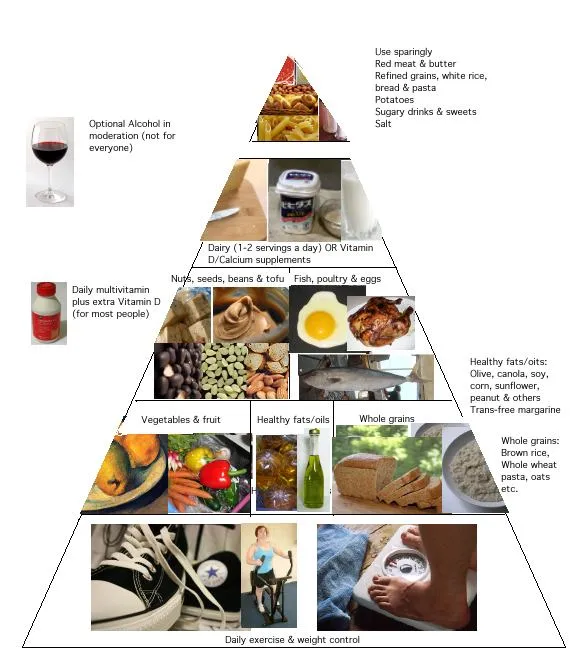
Photo: SusanLesch, CC BY-SA 4.0, via Wikimedia Commons
Walk into any US pharmacy aisle and you’ll see the same promise in slightly different fonts: one tablet, one day, everything covered. The all-in-one multivitamin is the Swiss Army knife of the supplement shelf. It’s convenient, familiar, and often cheap enough to toss in the cart without much thought. But the word 'complete' on a label deserves a closer look—especially in 2026, when formulas are more crowded than ever and marketing copy has gotten very good at sounding clinical.
'Complete' Is a Marketing Word, Not a Regulatory One
In the US, the FDA does not define 'complete multivitamin' as an official category. A manufacturer can use the phrase without meeting a specific nutrient checklist. What the label must do is follow supplement labeling rules: list ingredients, amounts, percent Daily Value (%DV), and avoid disease claims. That’s useful information, but it is not the same as a guarantee that the pill covers your personal needs.
This matters because 'complete' sounds like a clinical conclusion. In practice, it usually means the formula includes a broad spread of vitamins and minerals—often at doses that look impressive until you read the fine print. The real question is not whether the bottle says complete. It’s whether the amounts and forms actually match what a typical adult might need, and where the formula quietly skips the heavy lifting.
The %DV Trap: Big Percentages, Small Real-World Doses
The %DV column is one of the most misunderstood parts of a supplement label. It is based on a reference diet, not on your bloodwork, your medications, or your lunch. A nutrient can show 100% DV and still be a modest dose. Another can show 500% DV and be harmless—or unnecessary—depending on the nutrient.
Minerals are where this gets especially slippery. Calcium and magnesium are bulky. They take up space in a tablet, and they are hard to pack into a one-a-day at meaningful doses. A common all-in-one might give you a small fraction of the Daily Value for calcium and magnesium while loading up on B vitamins because B vitamins are cheap and compact. That doesn’t make the product useless. It does mean the word 'complete' is doing more work than the formula.
Fat-soluble vitamins deserve a similar side-eye. Vitamin D, vitamin K, and vitamin A are often included at token amounts or in forms that vary widely by brand. If your main reason for taking a multi is vitamin D—a common motivation in the US, especially during winter—check the actual IU or mcg number. A multi that provides 400 IU of D3 is not the same as a dedicated D3 supplement at 1,000 or 2,000 IU.
What a One-Pill Multi Realistically Covers
For a generally healthy adult with a mixed diet, a basic multivitamin can be a reasonable safety net for small shortfalls. It may help cover low-level gaps in B vitamins, vitamin C, vitamin E, and a few trace minerals. It can be a convenient habit for people who travel often, eat irregularly, or simply prefer one bottle to five.
That’s the smart-convenience case: you are not treating a deficiency; you are padding the edges of an already decent diet. In that scenario, a mid-priced tablet with third-party testing and a transparent label can be a perfectly sensible daily routine.
But a multi is not a replacement for food, and it is not a targeted fix. If you have been diagnosed with low vitamin D, low B12, iron deficiency, or low magnesium, a broad multi is usually the wrong tool. The doses are often too small, the forms may not be ideal, and the extra ingredients add noise without solving the problem. That is a conversation for a clinician who can look at labs and your full medication list.
Where All-in-One Formulas Quietly Fall Short
A few gaps show up again and again in US multi formulas.
- Calcium and magnesium: Often present at doses far below what a dedicated supplement would provide. If these are priorities, a multi is rarely the efficient route.
- Iron: Some multis include iron; many don’t. That’s good for people who don’t need it and frustrating for people who do. Iron is not a nutrient to guess at.
- Vitamin D: The dose can be modest, and the form matters. D3 is common, but the IU count is the number to watch.
- B12: Cyanocobalamin is common and effective for many people. Methylcobalamin is popular, but it is not automatically better for everyone.
- Bioavailability claims: 'Food-based,' 'whole-food,' and 'highly absorbable' are marketing phrases unless the label gives you specifics. A fancy word is not a lab result.
A Practical Way to Audit Your Own Bottle
Start with the Supplement Facts panel, not the front label. Ask three questions. First, what are the actual doses of the nutrients you care about? Second, are the forms clearly named—D3 versus D2, magnesium glycinate versus oxide, methylcobalamin versus cyanocobalamin? Third, is there independent testing? Seals from USP or NSF, or verification from a lab like ConsumerLab, are more meaningful than a bold 'premium' banner.
Then compare the multi to your actual routine. If you already take a dedicated D3 or magnesium pill, you may be doubling up unnecessarily. If you take a multi only because it feels responsible, that’s fine—but call it what it is: a convenient habit, not comprehensive coverage.
The one-pill promise is not a scam. It is just narrower than the label suggests. In 2026, the smart move is to treat an all-in-one multi as a baseline, not a blanket. It can cover some small gaps with minimal effort. It cannot cover everything, and it was never designed to.